

Let's have a look at seller's journey
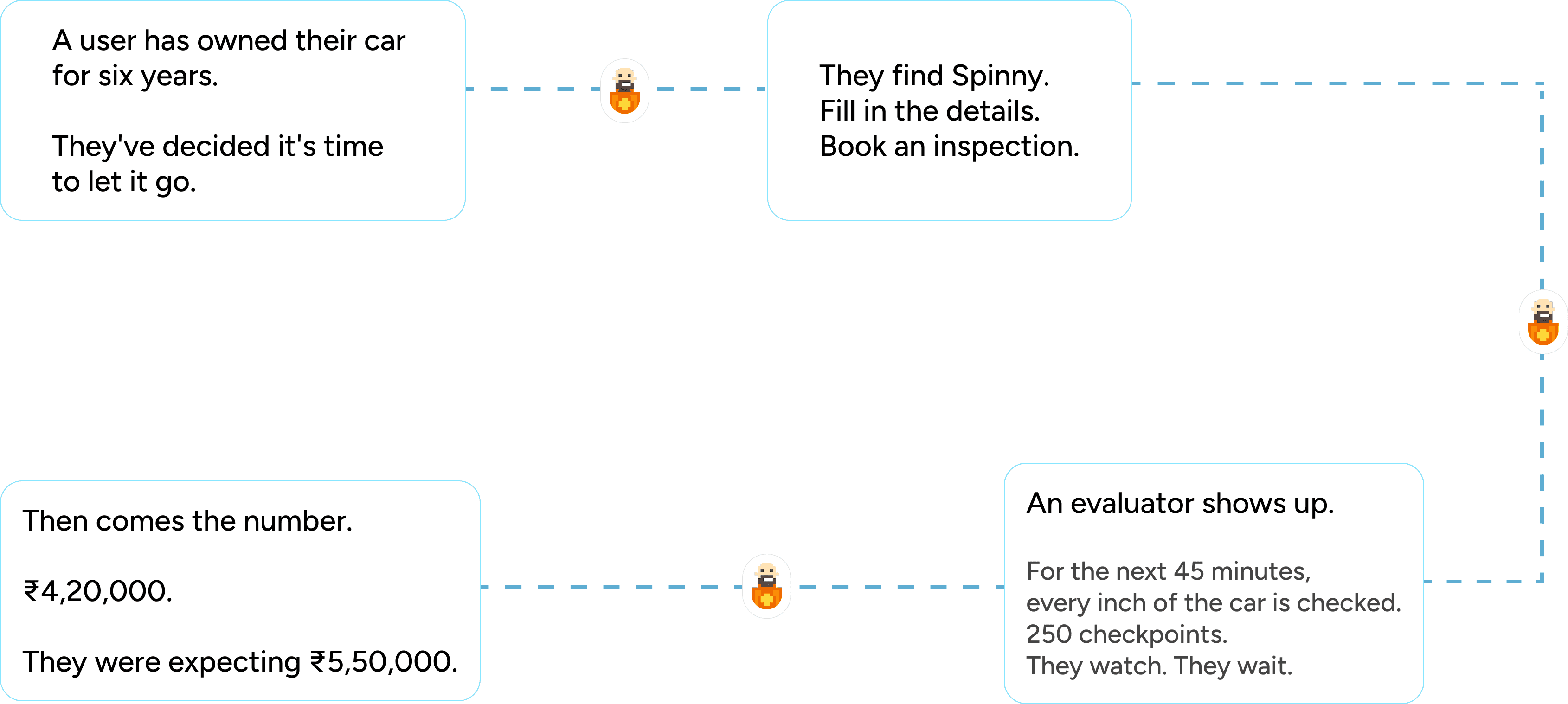
They want to ask why.
What did you find? What brought the price down? Is this fair?
But there's nothing to show them.
No breakdown. No explanation.
Just a number they have to
decide on. Right now.
THE GAP WAS THE NEED.
The Brief
Customers wanted transparency.
They sat through 45 minutes to an hour of inspection and walked away with just a price - no explanation, no breakdown.
The Business wanted a revenue line.
The one that didn't require new operational effort. The inspections were already happening. The data already existed.
THE ASK.
"Start selling inspection reports. Start with an MVP.
Figure out a way to generate the report through Figma only."
10 days. No dev support.
Validate the market before investing in product.
A business-led project. No PM. Two designers — design and shipment.
Constraints
The brief wasn't just "design a report."
Tell them what's wrong with their car. But not enough for a dealer to price the repair.
Be transparent -they're paying for it. But not so detailed that it works against us.
Be honest about the condition. But careful use of words as this is still their car.

Sellers.
Phase 1 was scoped to people already selling their car through Spinny.
A user. 30 years old. Money conscious. Values transparency. Wants to understand why their car was valued the way it was, and what to consider if they ever sold to a local dealer instead.
We also talked to a few of them before designing.
The question wasn't "what should the report contain?"
It was "will a seller actually pay for this?"
Before opening Figma, we studied every inspection report in the market.
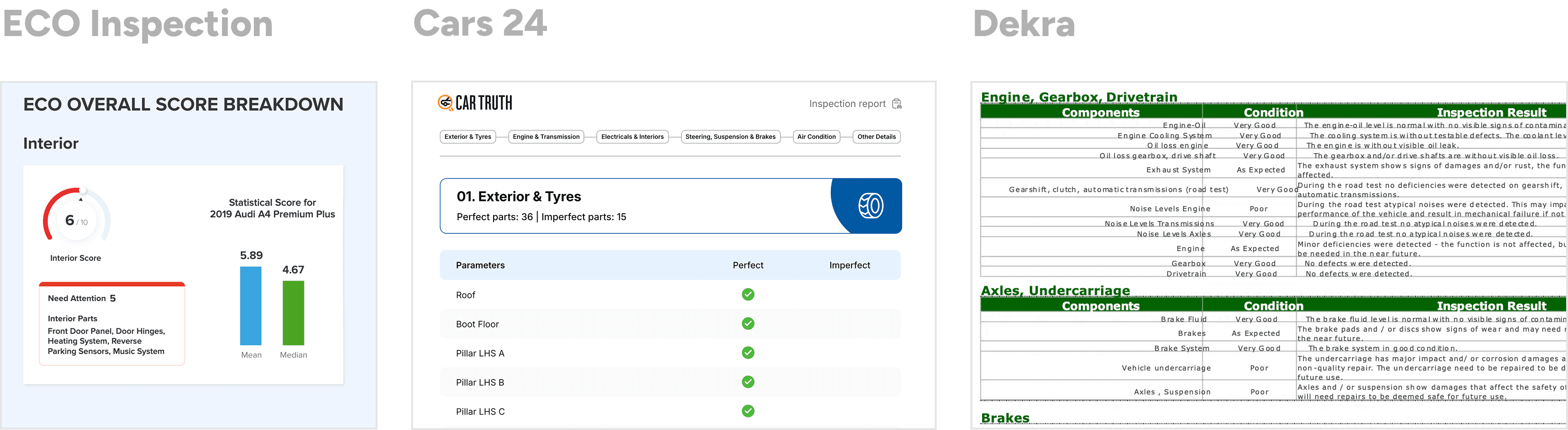
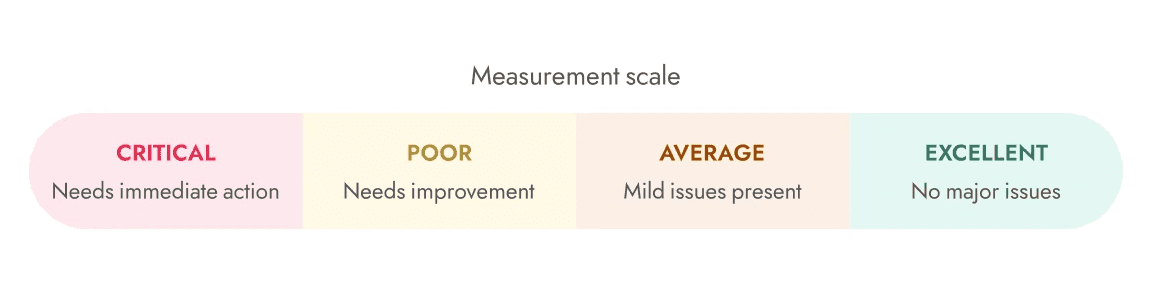
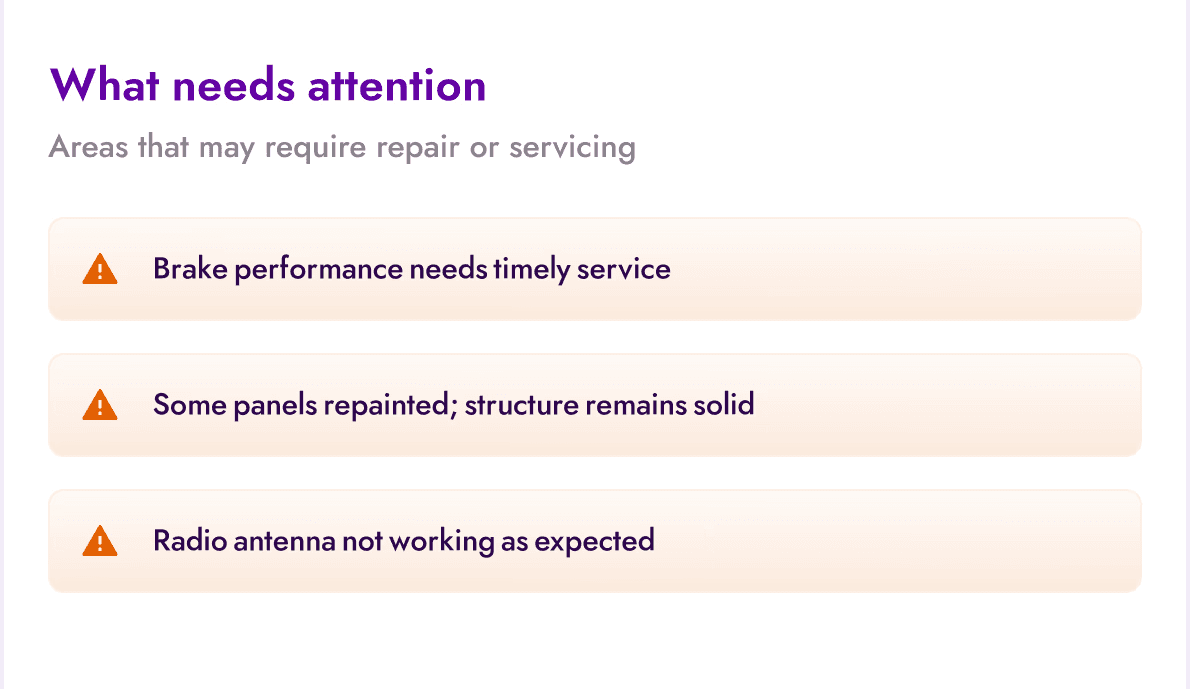
What was missing across all three was language.
And we, solved that. Will the customer understand this without going to Google?
That question shaped every label, every rating, every word in our report.
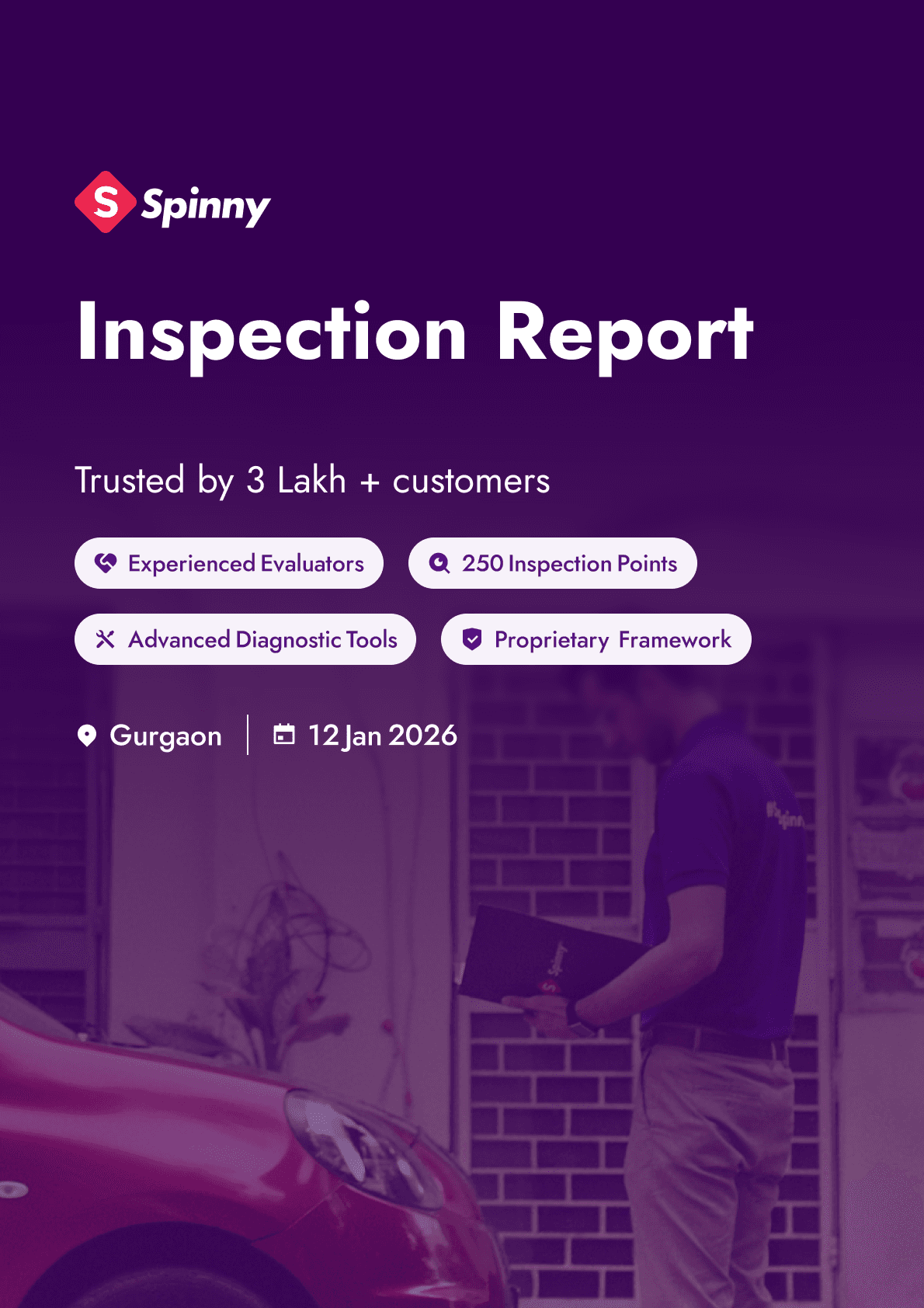
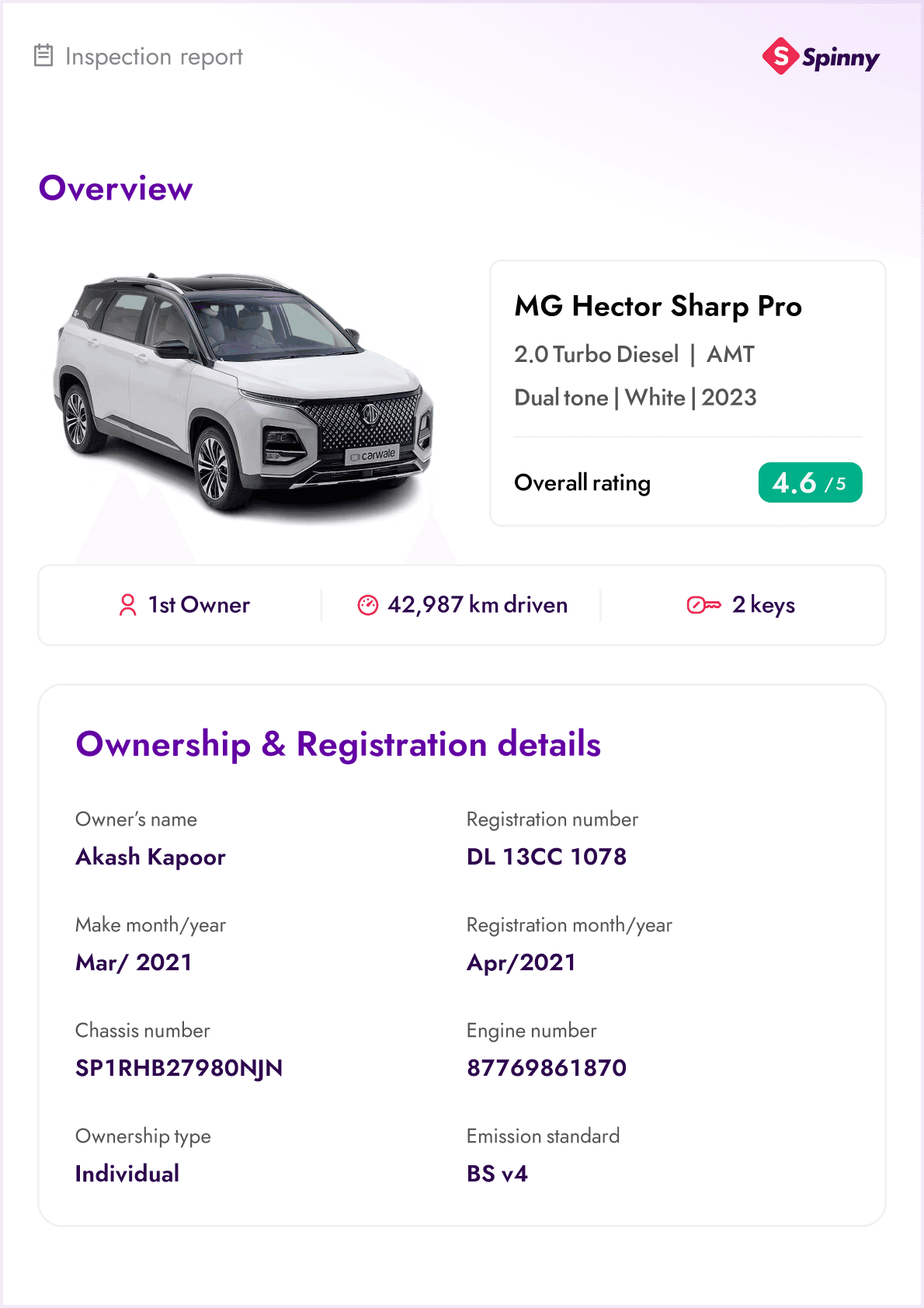
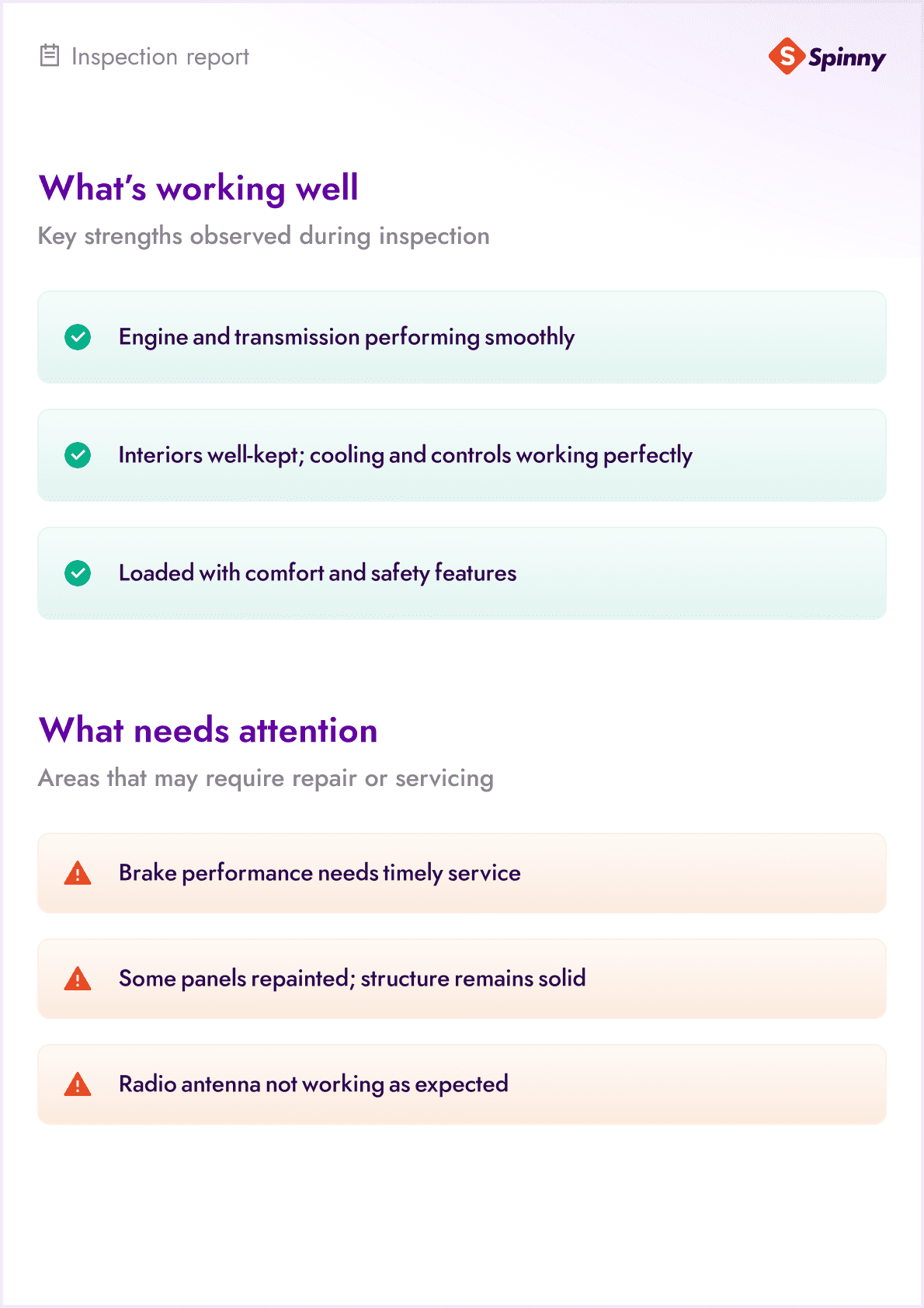
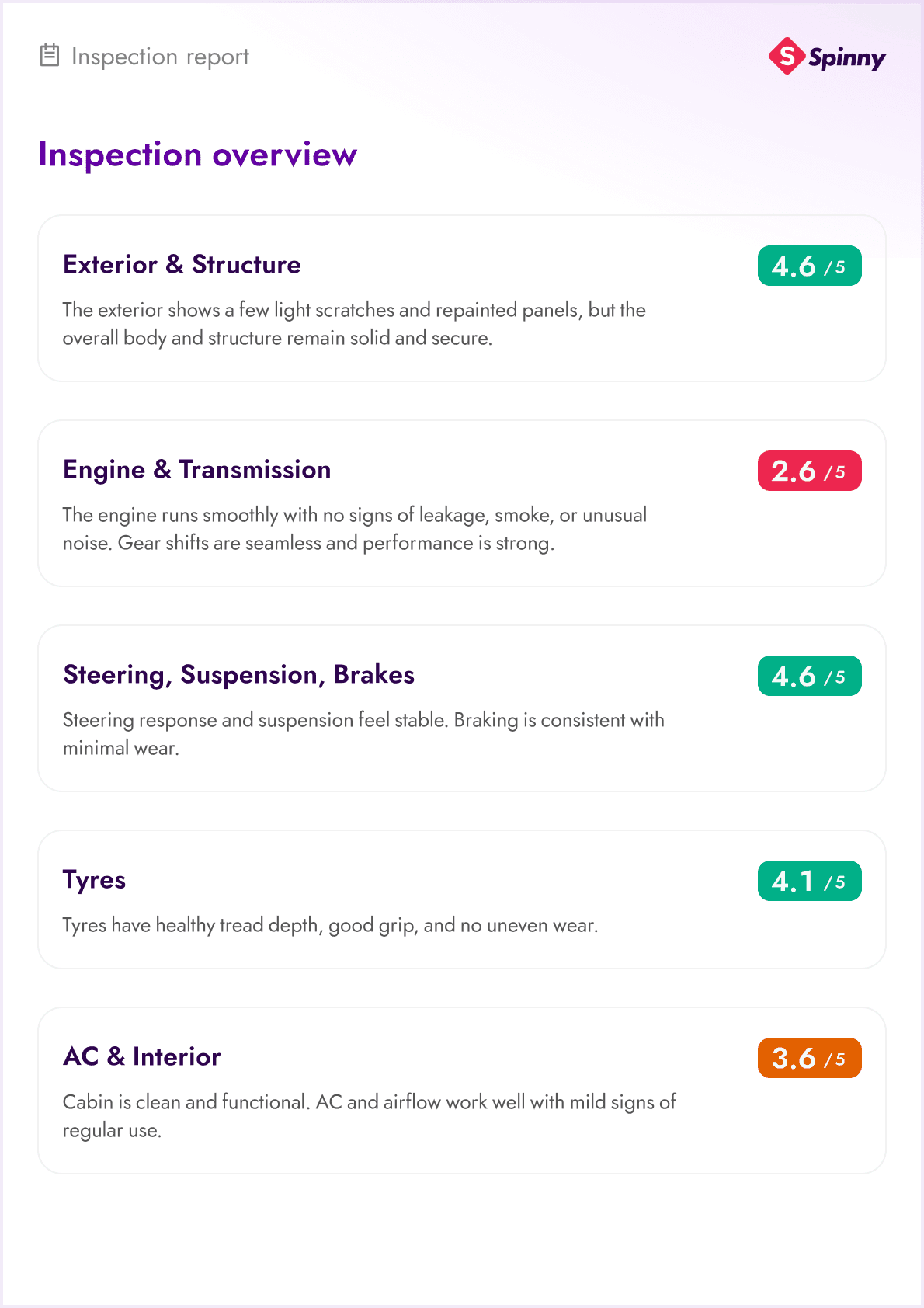
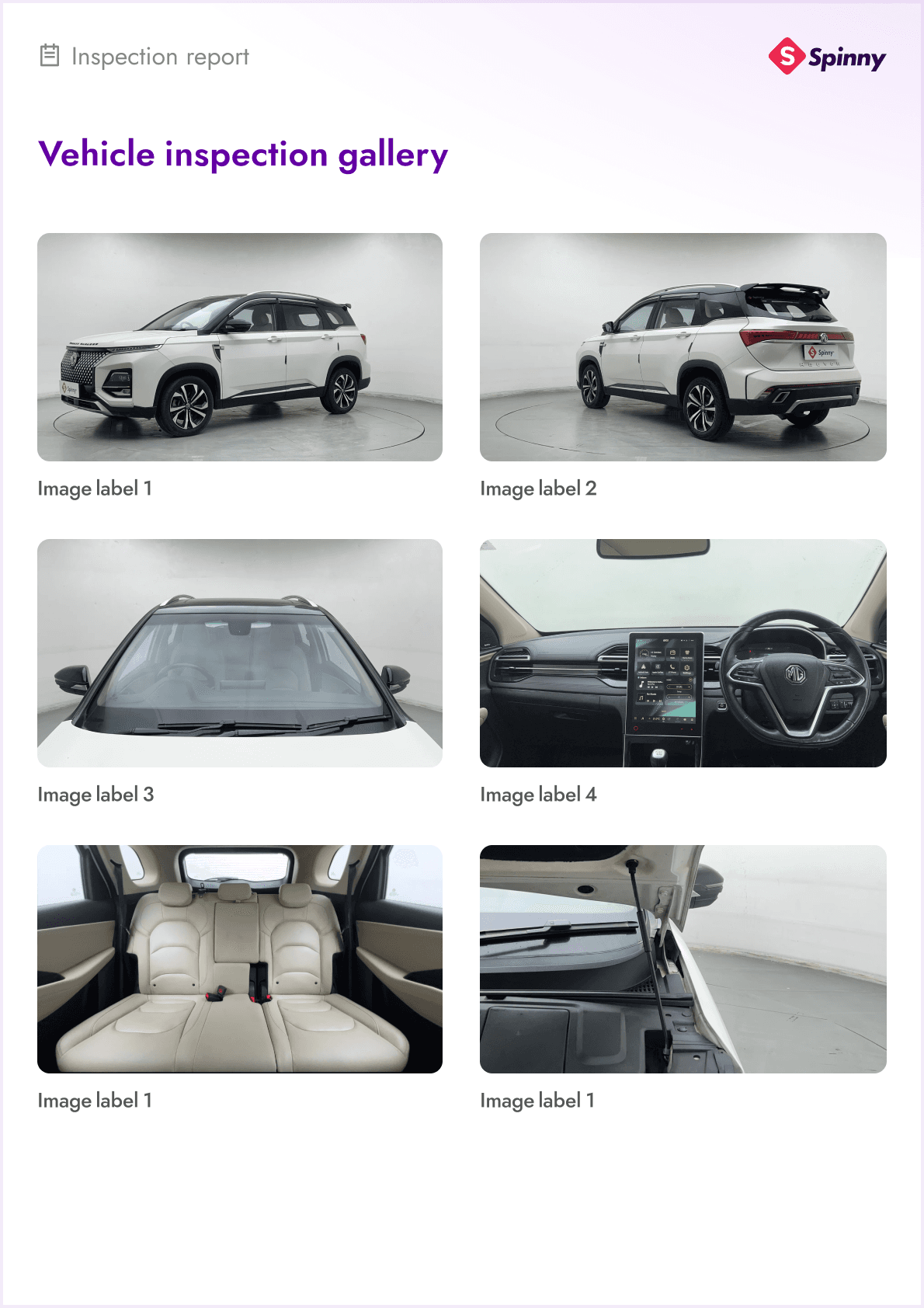
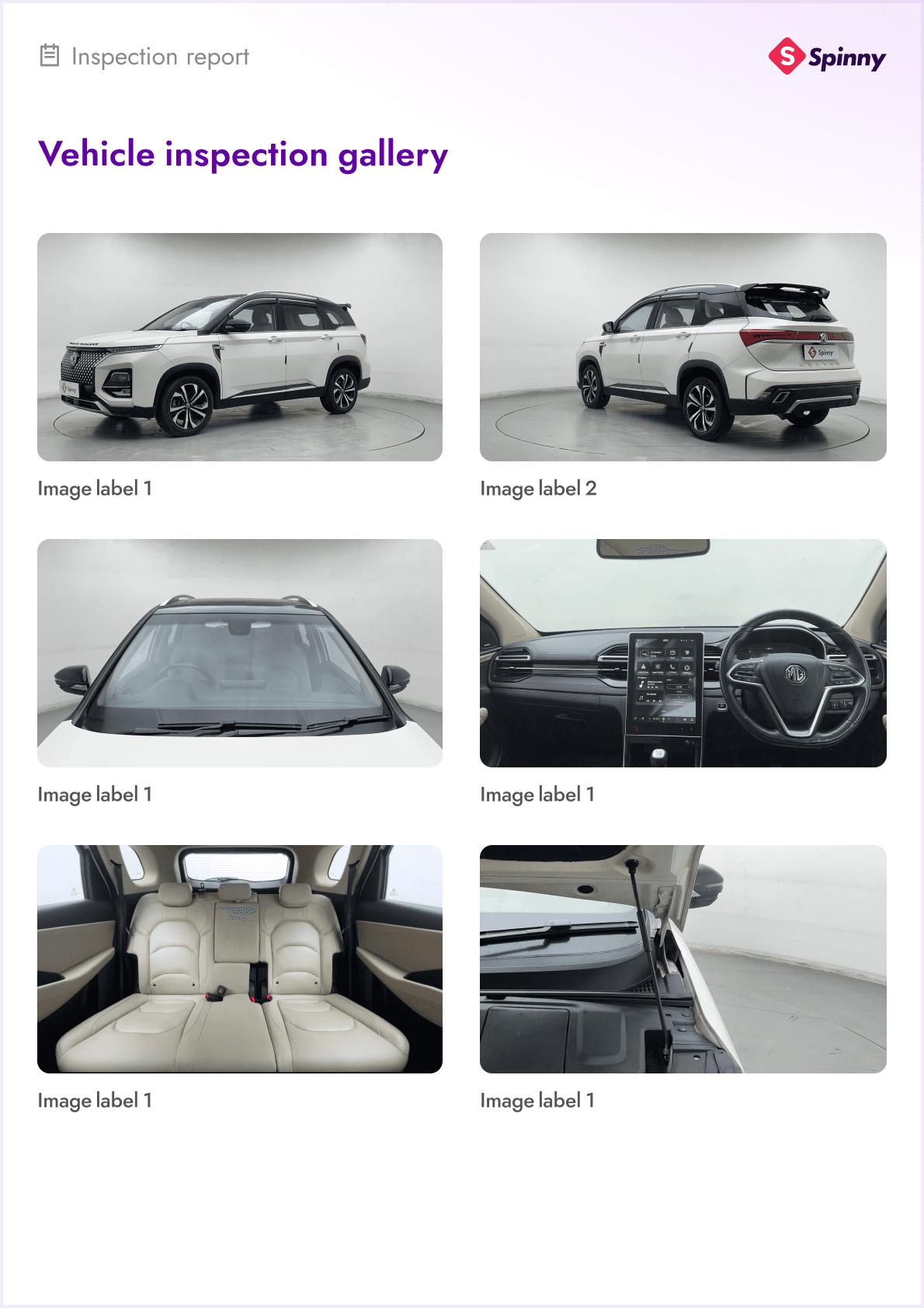
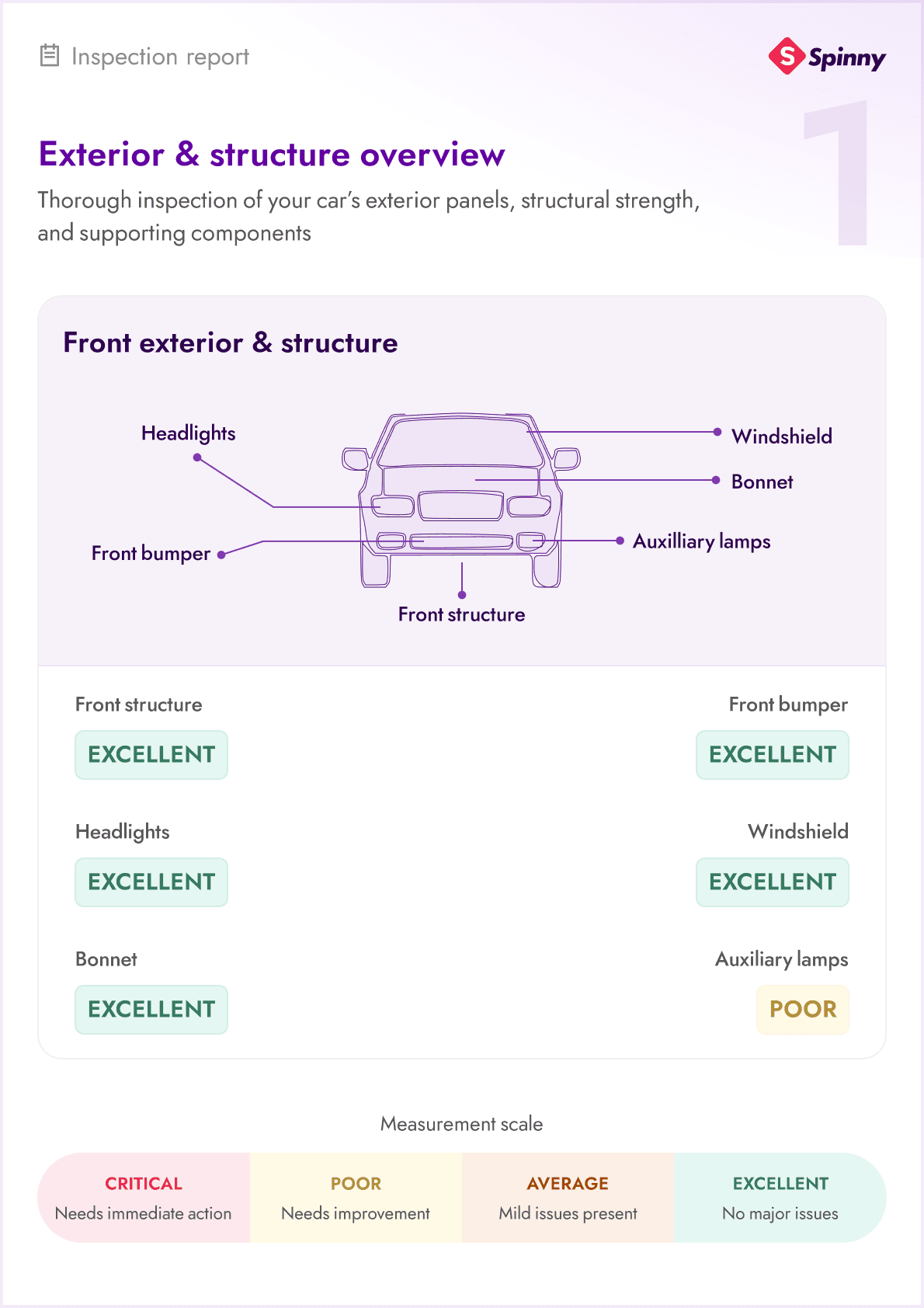
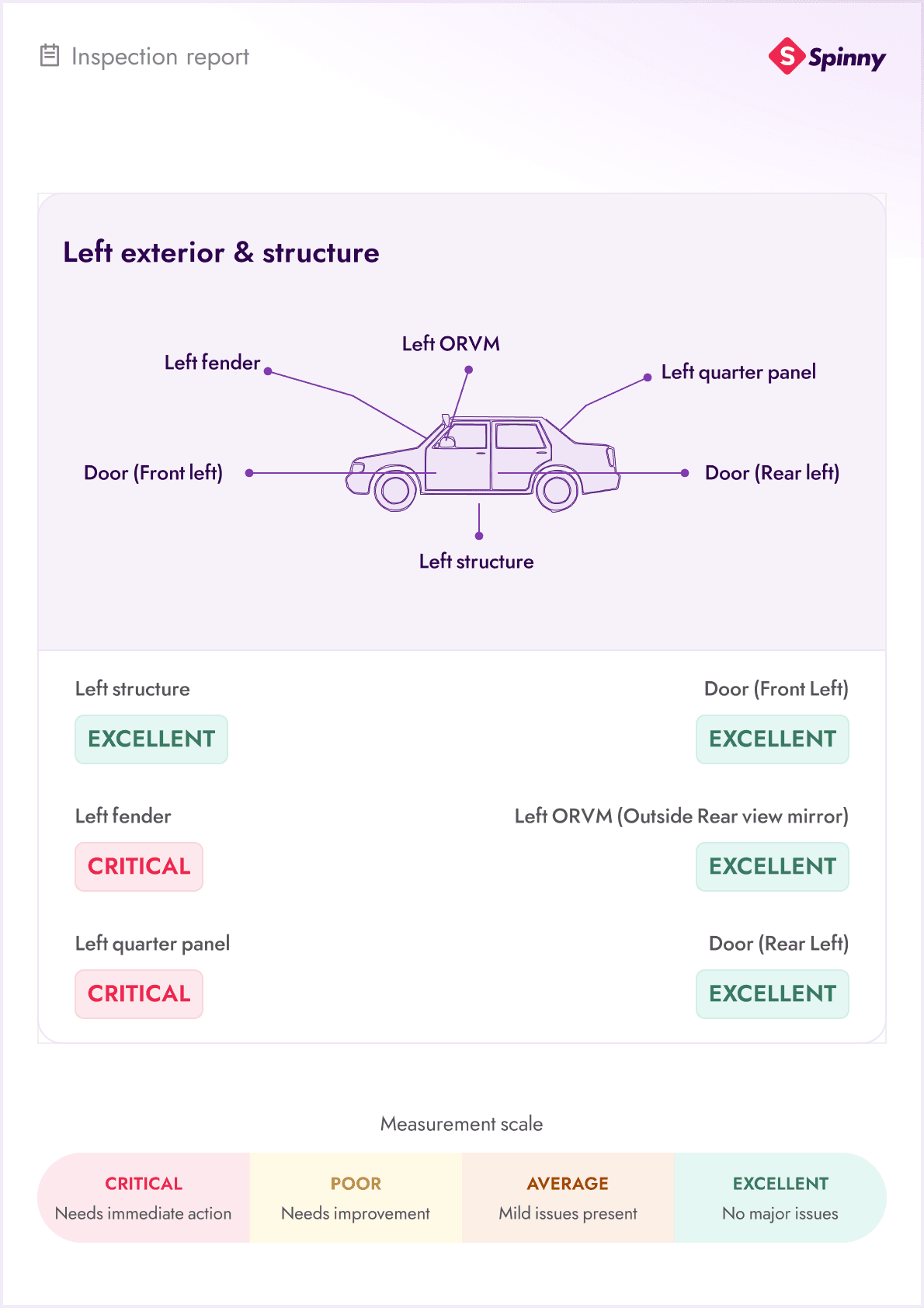
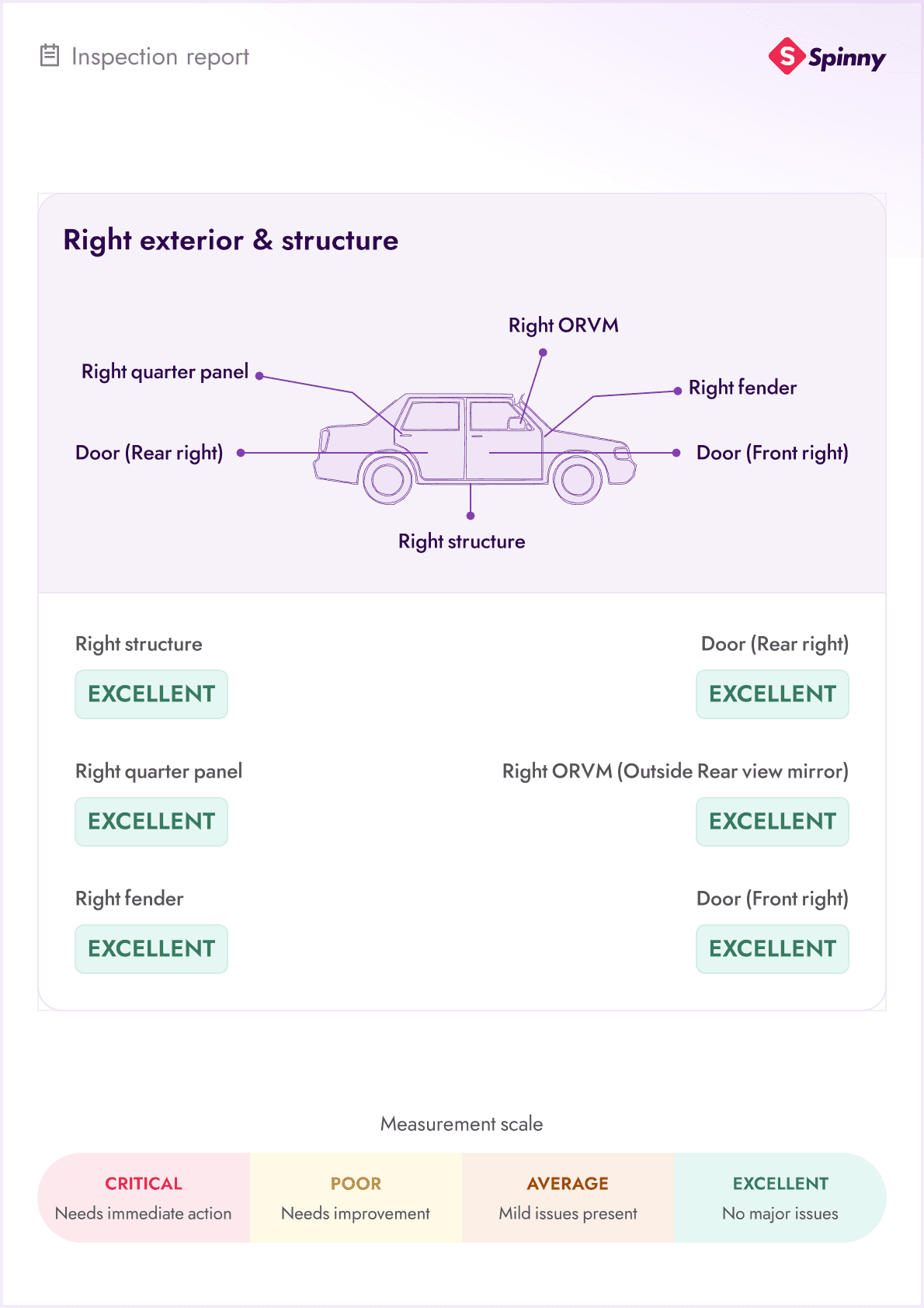
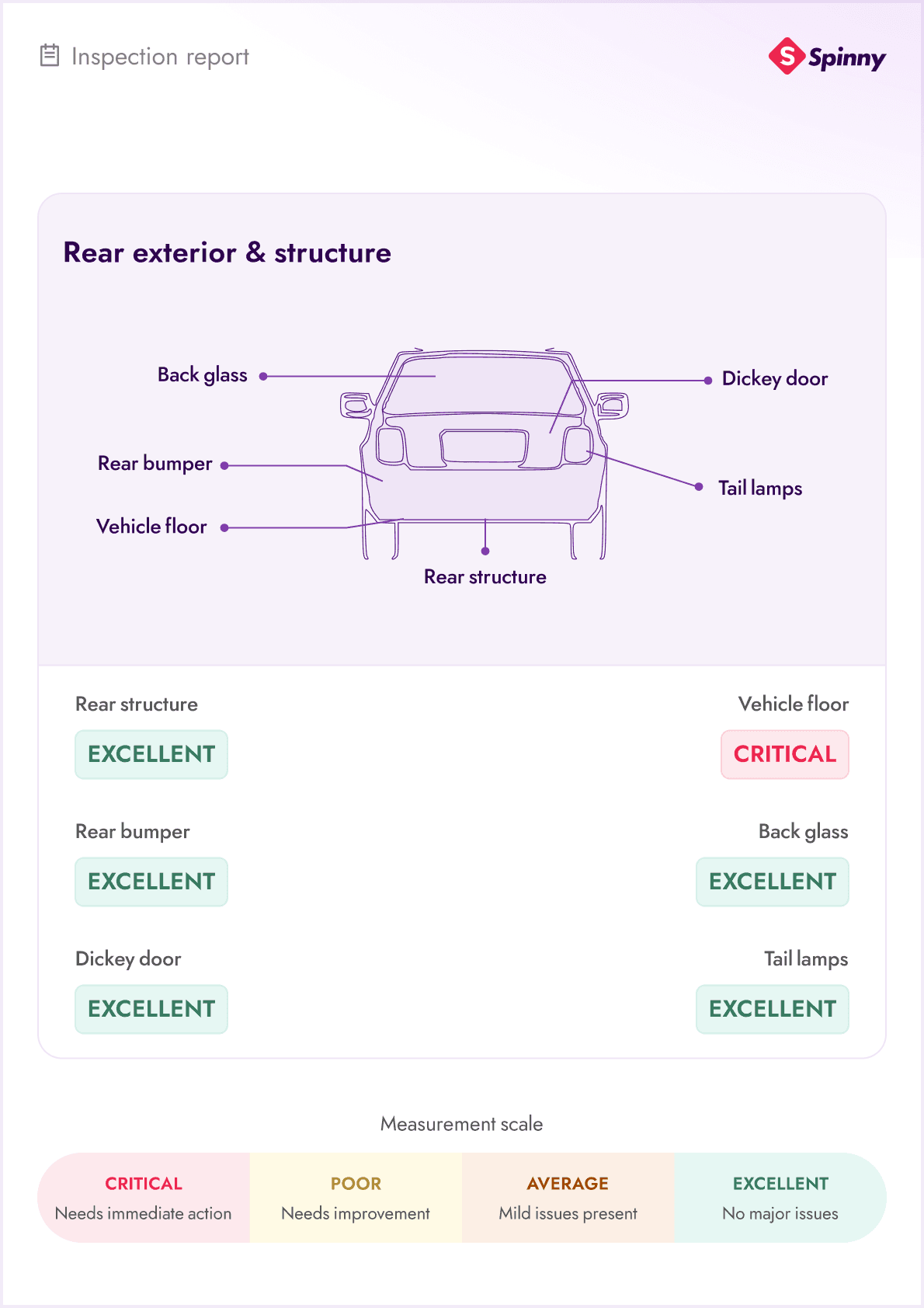
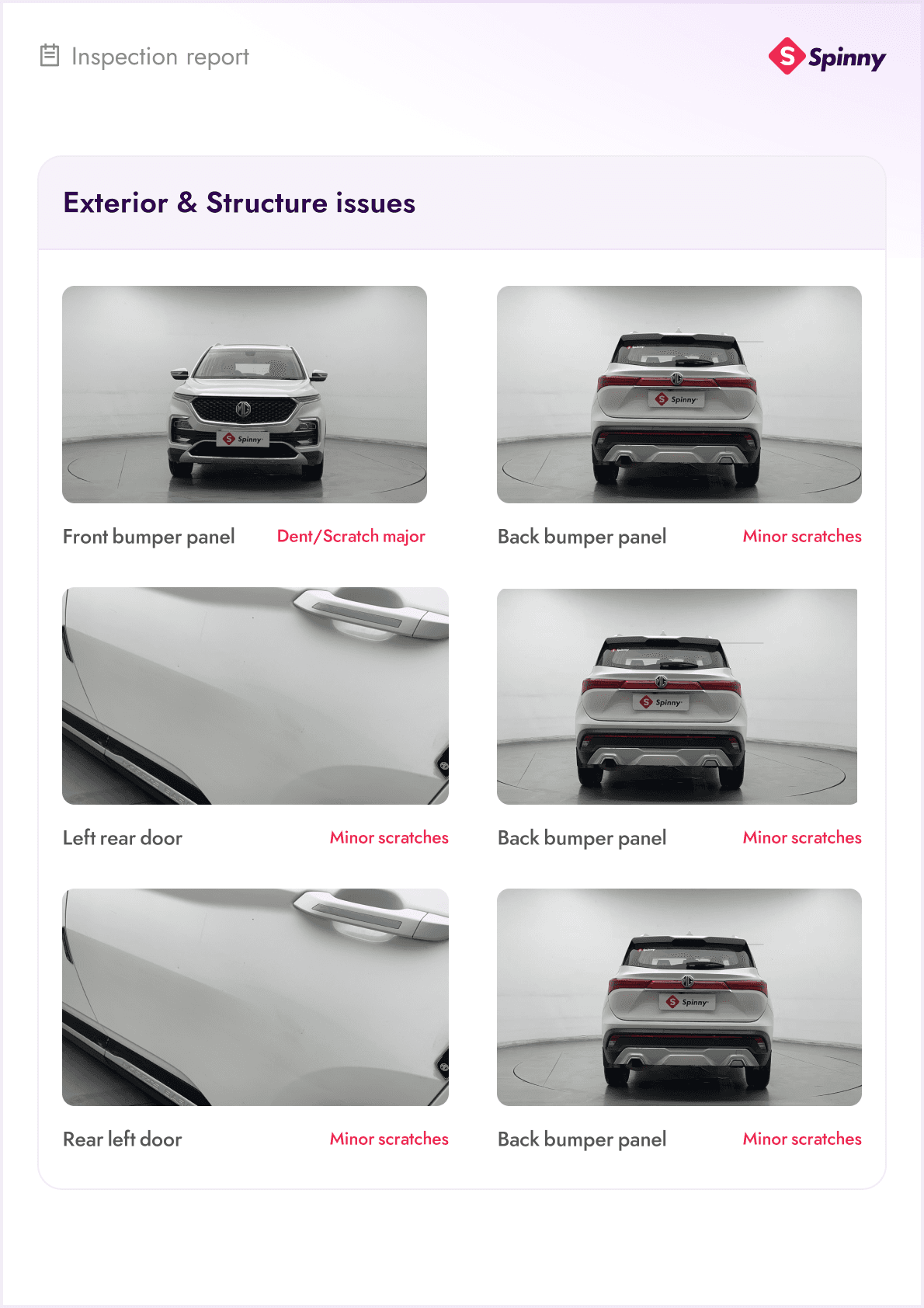
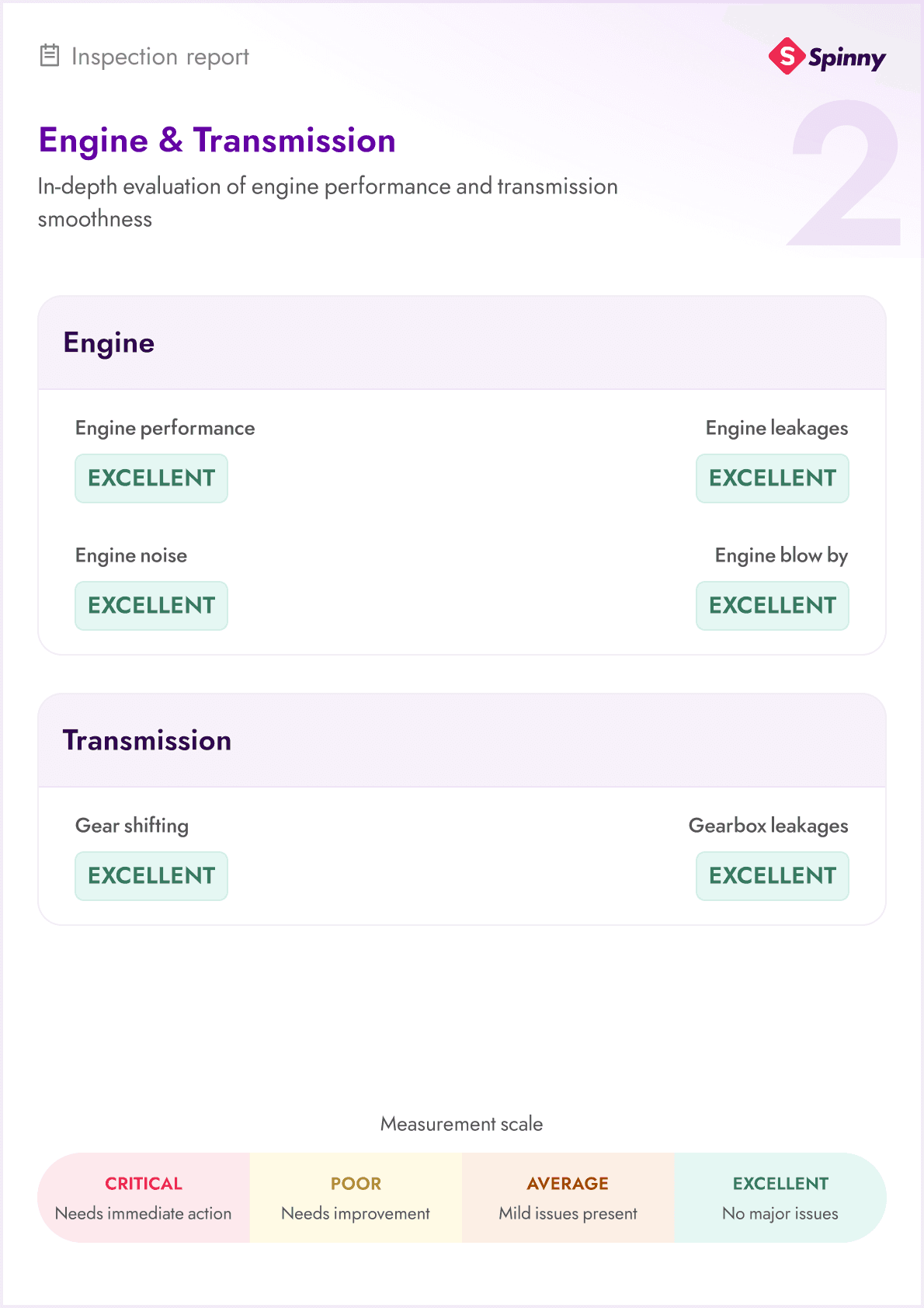
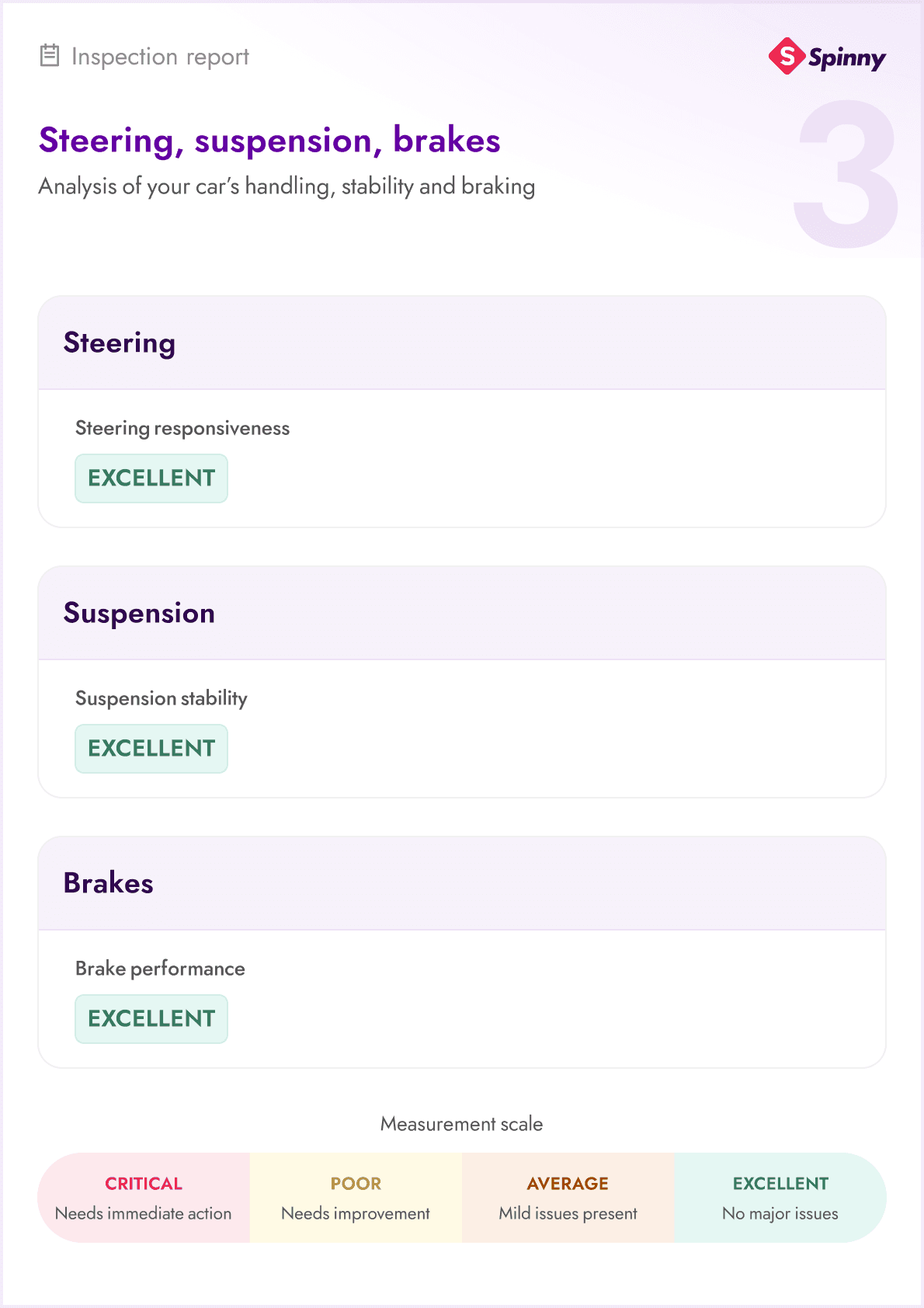
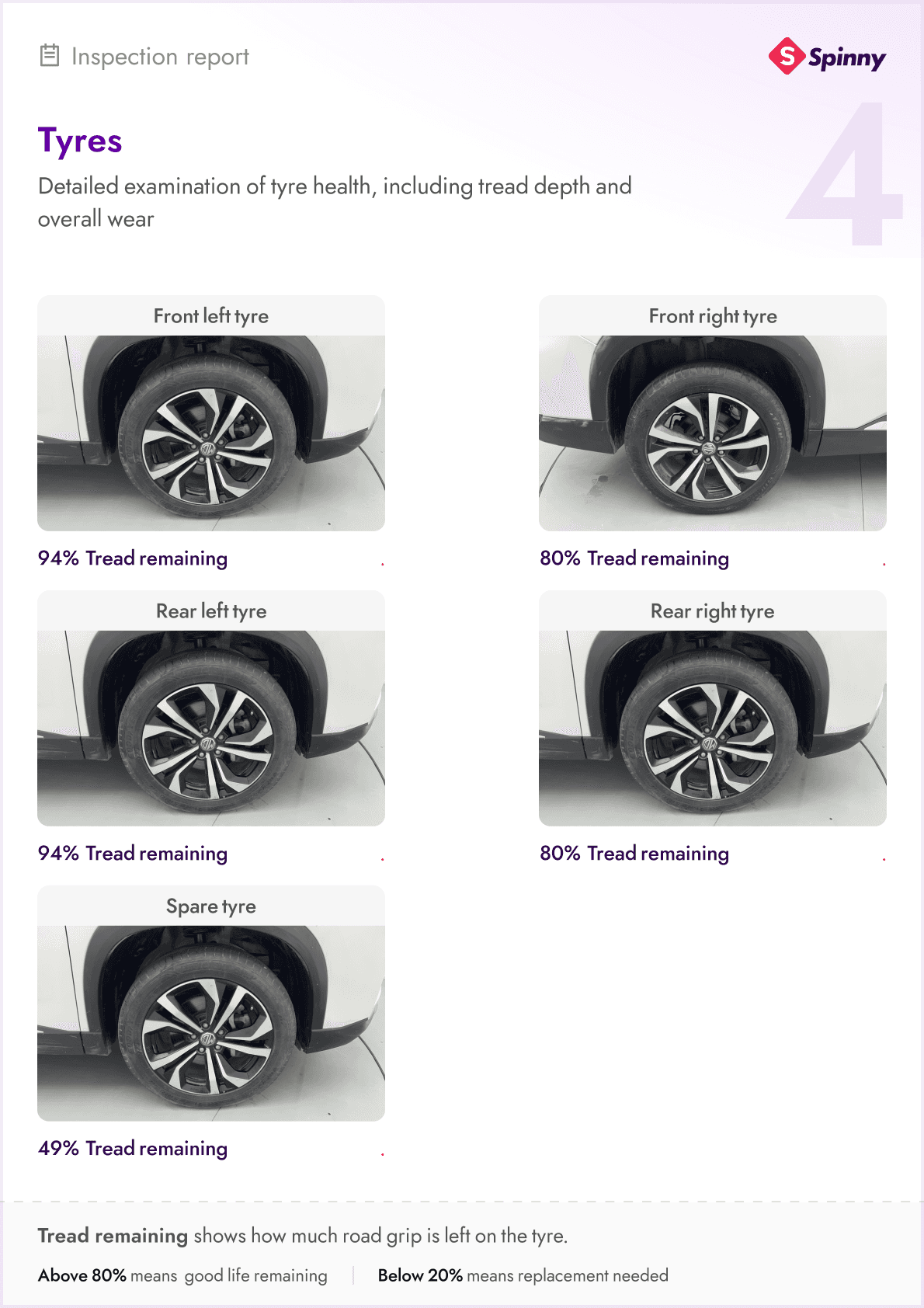
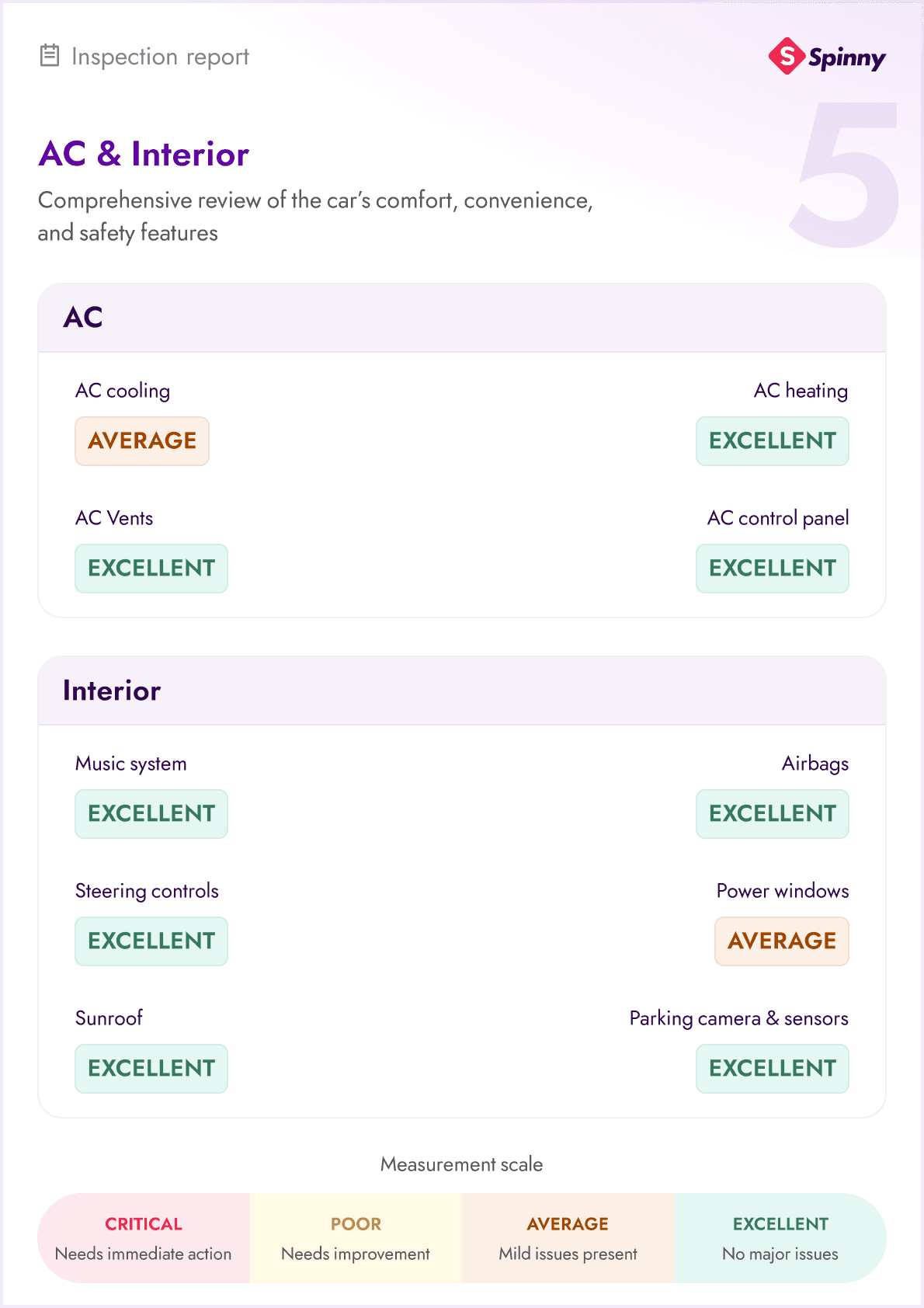
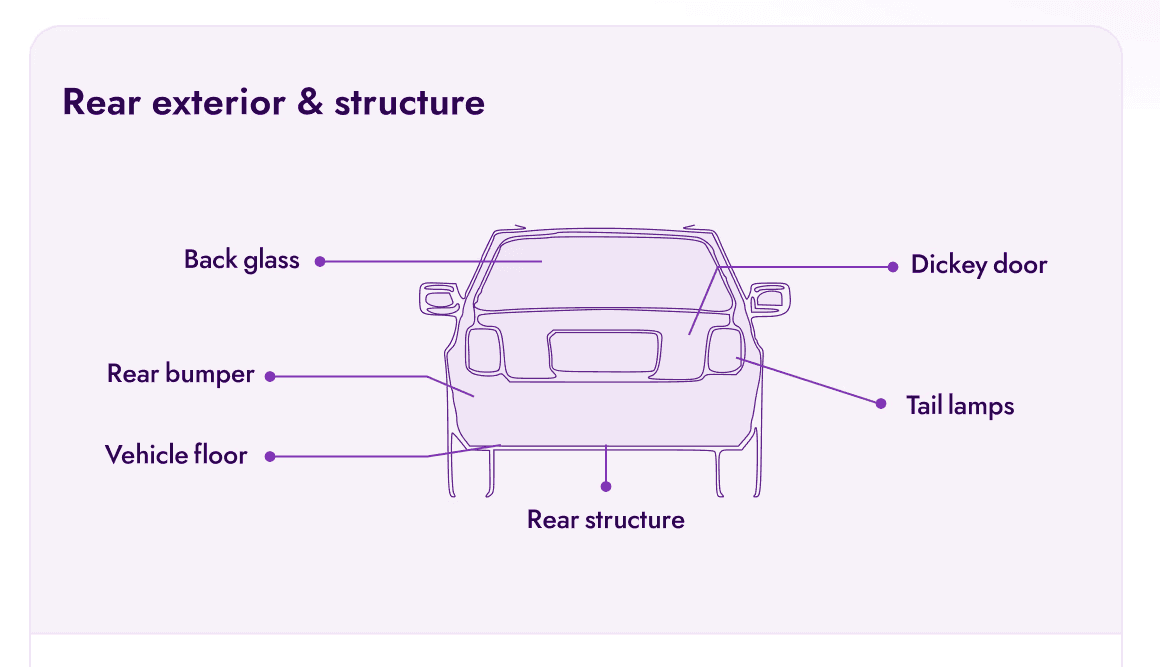
We drew the car
Because "rear quarter panel" means nothing to a regular seller. But "back-right door" does.
How it worked?
What was missing across all three was language.
And we, solved that. Will the customer understand this without going to Google?
That question shaped every label, every rating, every word in our report.

How it worked?
Inspection data lived in Spinny's CRM.
Ops pulled that data into a Google Sheet.
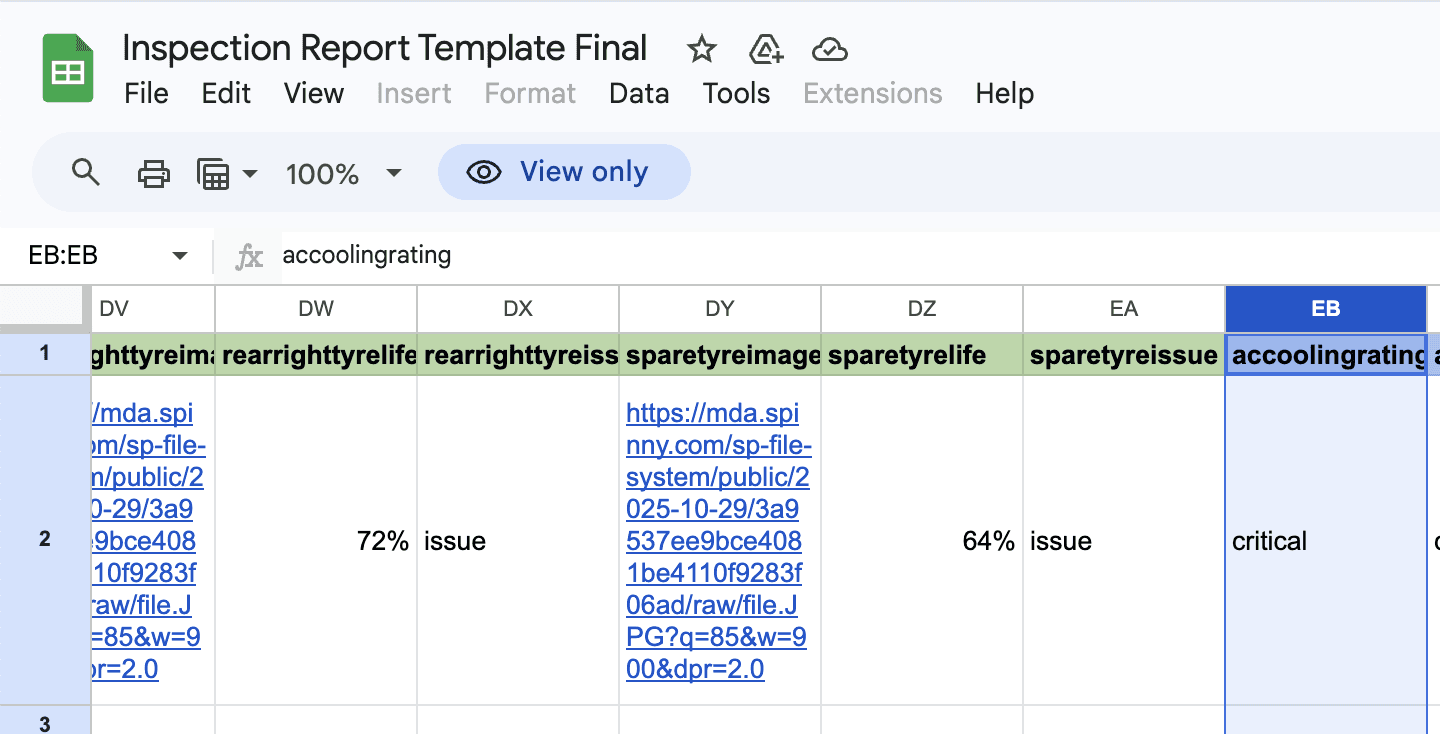
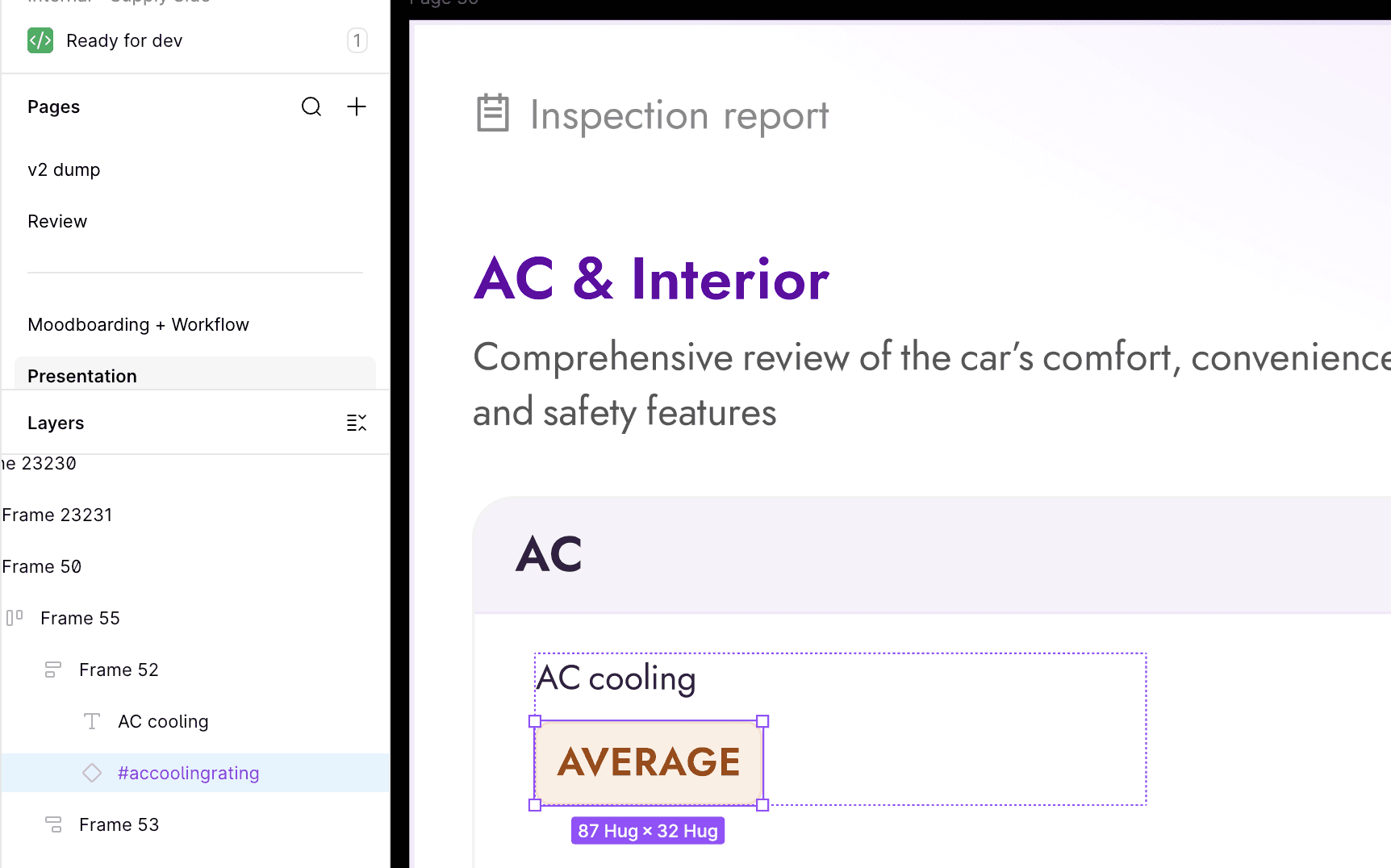
Google Sheets Sync - a Figma plugin mapped sheet columns to layer names.
Every row populated a new report. A PDF was exported. The customer received it.
This changed how I designed.
The plugin — Google Sheets Sync
Every layer name was a data binding — not an organizational label.
A typo meant the wrong component rendered.
We built a component set: Excellent · Poor · Average · Critical · NA
Including NA — for when data simply wasn't available.
The excel sheet - column naming
Design file - the layer naming
Just a sheet, a plugin, and two designers shipping an MVP together.
The impact
₹40,000
every single day.
Average revenue, generated currently
MVP + Phase 1 both ran on this design
100% live PAN India
My learnings
This project taught me what it actually means to own a product.
No PM. No dev handoffs. No one translating between business and design.
That gap became my job.
I learned to speak business — not to dress up design decisions in business language, but to genuinely understand what stakeholders needed and find the overlap with what the customer needed.
I learned to convince in their language. Not "this is better UX" — but "a customer who trusts the report is more likely to close the deal."
For the first time, I felt like a product owner.
Not a designer executing a brief. Someone responsible for whether this thing worked, end to end, from the first layer name to the last PDF exported.
That feeling is what I'm chasing in every project now.
THAT'S A WRAP